OpenAI and Apple Tensions: Lessons for Businesses Relying on AI Integrations
Sources, AI assistance & corrections
Editorial review: October 22, 2026. Original publication date is preserved; examples are editorial analysis rather than measured customer outcomes.
The reports discussed in this archived article concern the relationship between OpenAI and Apple. Reported negotiations or legal options should not be presented as a final court outcome. For a business using an AI integration, the practical issue is continuity when a supplier changes its terms or product direction.
Map the dependency before changing suppliers
List the features that depend on the provider: customer replies, document summaries, account sign-in and saved conversation history. Identify which features can continue without AI. Keep order records and approved product information in a system the business controls rather than relying on a chatbot conversation as the only record.
A worked planning example
Consider a service company whose website assistant collects an enquiry and proposes a reply. If the model is unavailable, the enquiry should still reach the team's queue. The interface can acknowledge receipt and let a person respond later. A timeout must not discard the customer's message or claim that a member of staff has already read it. This is a hypothetical design example, not a measured client result.
Test a replacement on the same evidence
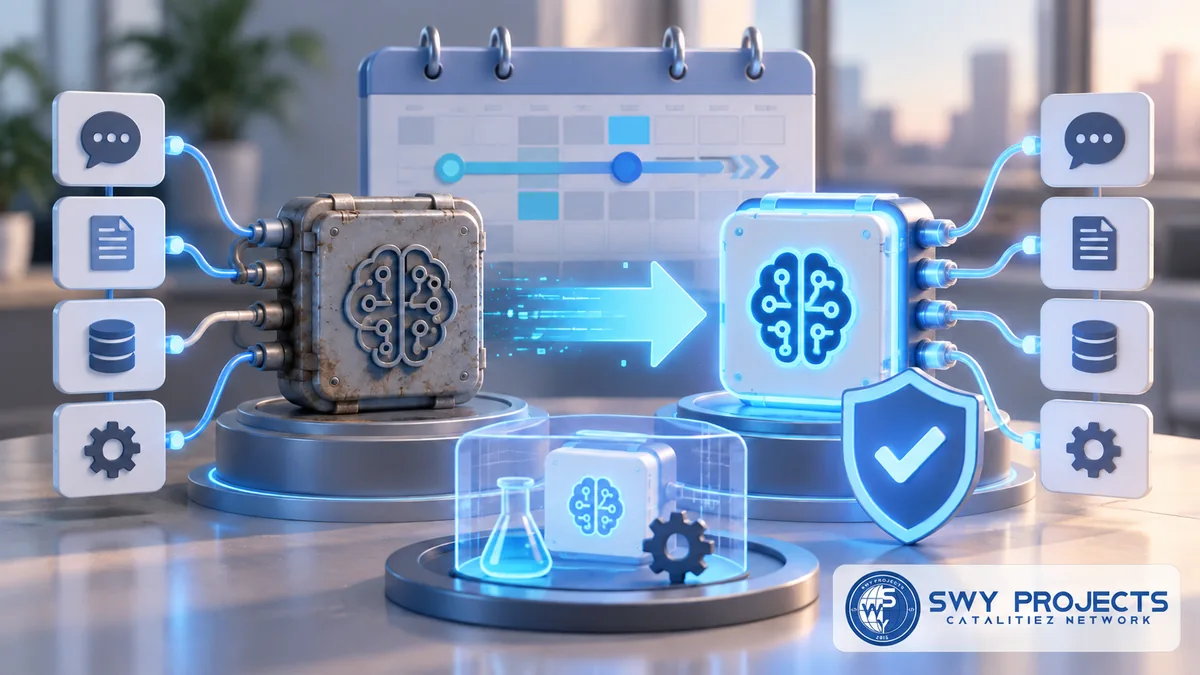
Use anonymized questions, the same reference documents and a written checklist. Compare factual accuracy, refusal of unsupported promises, response time and the cost of accepted answers after human corrections. Record the model and test date because product names alone do not identify a reproducible test.
Keep credentials out of browser code, document who owns the integration and rehearse rollback before a supplier migration. These are engineering recommendations from SWY; they do not establish the outcome of the reported commercial dispute.